Puffing Billy and the Dandenongs from Melbourne: The 1900 Steam Train, the Tallest Flowering Trees, and a Lyrebird’s Long Odds
An hour east by suburban train, a steam railway running since 1900 threads fern gullies below the tallest flowering trees on earth — book ahead, and know the famous legs-out-the-window photographs are history.
The short version
- The car-free route per the alarm: Melbourne’s suburban network runs Flinders Street to Belgrave in about an hour on metro fares, and Puffing Billy’s station sits a signed few minutes’ walk from the platform — tickets booked ahead at puffingbillyrailway.org.au.
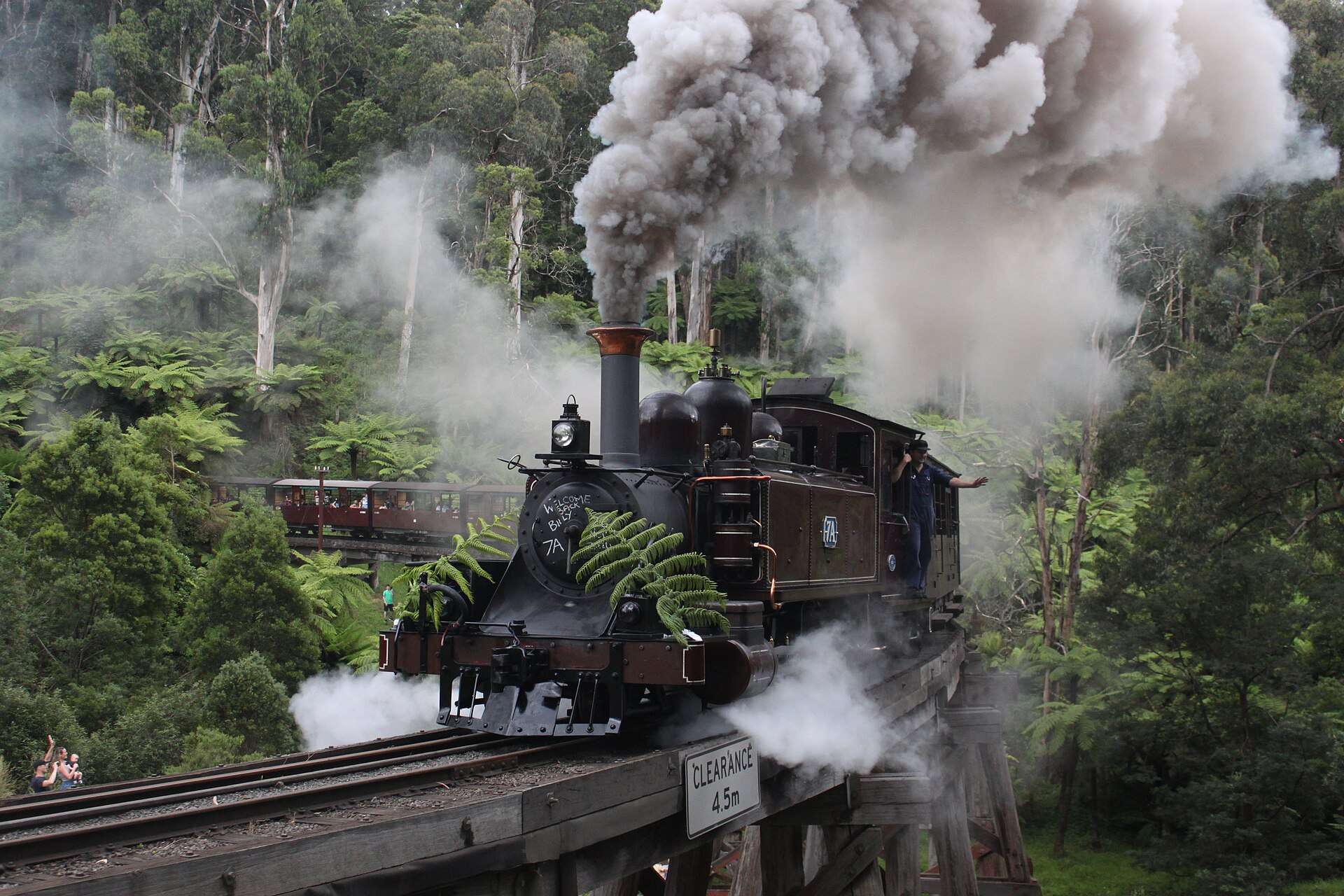
- Puffing Billy has steamed since 1900: a narrow-gauge mountain railway saved by volunteers after a 1950s landslide nearly ended it, now running excursion timetables from Belgrave through fern gullies and over the famous Monbulk Creek trestle to Lakeside and Gembrook.
- The legs-out honesty per the alarm: the century-old tradition of riding with legs dangling from the open sides was ended by the railway on safety grounds — the open-sided carriages remain, the forest still arrives at eye level, and the trestle-crossing photograph survives the rule change intact.
- Sherbrooke Forest holds the botanical headline: mountain ash (Eucalyptus regnans), the tallest flowering trees on earth, rising ninety-plus meters over tree-fern understory — with the superb lyrebird, the world’s great vocal mimic, as the dawn-and-luck resident per the alarm’s long-odds clause.
- The ranges’ village tier fills the middle hours: Sassafras and Olinda’s tearooms and bookshops, SkyHigh Mount Dandenong’s paid panorama back to the city, and the Alfred Nicholas Memorial Gardens’ lake — the autumn photograph of the hills.
- Lakeside (Emerald Lake Park) makes the natural steam-train turnaround: picnic lawns, paddle boats, and the return service booked on the same ticket — with Gembrook extending the line’s full length for the committed.

Getting there
The alarm’s no-car promise is real and rare: metro to Belgrave, walk to the steam platform, ride the timetable you booked. The railway runs multiple daily services with seasonal patterns — first trains give the quietest carriages and the coolest steam plumes. Village-hopping between Sassafras, Olinda, and the gardens without a car uses the local bus’s modest frequency or a short rideshare; drivers get flexibility at the cost of Belgrave’s parking scrum on school-holiday mornings.
The day
The steam leg first: Belgrave’s platform ceremony — the engine’s build-up, the volunteer crews in period kit — then the classic run through the gullies, over the Monbulk trestle (the open sides earning their keep as the forest closes in), to Lakeside’s lawns for the turnaround hour. Back at Belgrave, Sherbrooke Forest takes the afternoon: the Sherbrooke Falls or O’Donohue track loops under the mountain ash — necks craned at trees that outgrow cathedrals — with lyrebird luck per the alarm running best at dawn and dusk, and the bird’s car-alarm-and-kookaburra medleys unmistakable when it lands. The village interval slots by appetite: Devonshire tea in Sassafras done straight-faced, the Nicholas Gardens’ lake bowl, or SkyHigh’s paid view catching the city and bay in the late light. The suburban train home runs on Melbourne’s clock, indifferent to your steam schedule.
When to go
The railway steams year-round — cool months photograph best (visible steam, fireside carriages), school holidays book heaviest, and total-fire-ban summer days can substitute diesel haulage per the operator’s safety rules. Autumn (April–May) turns the gardens and village avenues into the hills’ signature color show; spring runs rhododendrons at the National Rhododendron Garden’s peak. Lyrebird display season peaks in winter, when the males perform loudest — the long odds per the alarm shorten slightly for dawn walkers in June and July.
Frequently Asked Questions
Why did the legs-out tradition end?
The railway ended it on safety grounds after an incident involving a passing vehicle made the risk undeniable — a century of charm conceded to physics. The open-sided carriages, the forest proximity, and the trestle photographs all survive; only the dangling does not, per the alarm’s history clause.
What are my real chances of seeing a lyrebird?
Long odds per the alarm, honestly held: Sherbrooke’s population is real and vocal, dawn and dusk on the quieter tracks give the best chances, and winter display season improves them. Many visitors hear one — the mimicry running through kookaburra, whipbird, and mechanical noises — without a sighting. Treat a sighting as the bonus, not the plan.
How tall are the mountain ash really?
Eucalyptus regnans is the tallest flowering plant on earth — Sherbrooke’s mature stands run ninety-plus meters, and historical Victorian specimens measured over one hundred. Only the coast redwoods (conifers, so non-flowering) exceed them. Standing at the base recalibrates the word ‘tree’ permanently.
Which steam trip length should I book?
Belgrave–Lakeside return is the classic: the trestle, the best gully scenery, and Emerald Lake’s turnaround lawns in a half-day shape. The full Gembrook run adds an hour-plus each way of quieter country for train devotees. First services on cool mornings give the photographs everyone came for.
Puffing Billy or Phillip Island or the Great Ocean Road from Melbourne?
All three are documented on this network: the penguins for wildlife ceremony at dusk, the Ocean Road for coastal scale as the longest day, and this page for steam, forest, and the shortest logistics — the only one of the three the suburban train covers entirely. Families with young children usually rank the steam day first.